Interview Take-Home — 72 Hours
Sumble: Solving the "Data Dump" with Logic-First UX
Reframing a profile viewer into a decision tool for GTM teams.
ContextSeries A, Data Heavy, B2B
The Challenge
GTM managers were overwhelmed by "noisy" data. They needed to identify high-intent leads within non-deterministic datasets, requiring a way to "steer" the data filtering without losing the big picture.
The Ask
This exercise involves taking a rapid first-pass at rethinking the view in the wider context of the application.
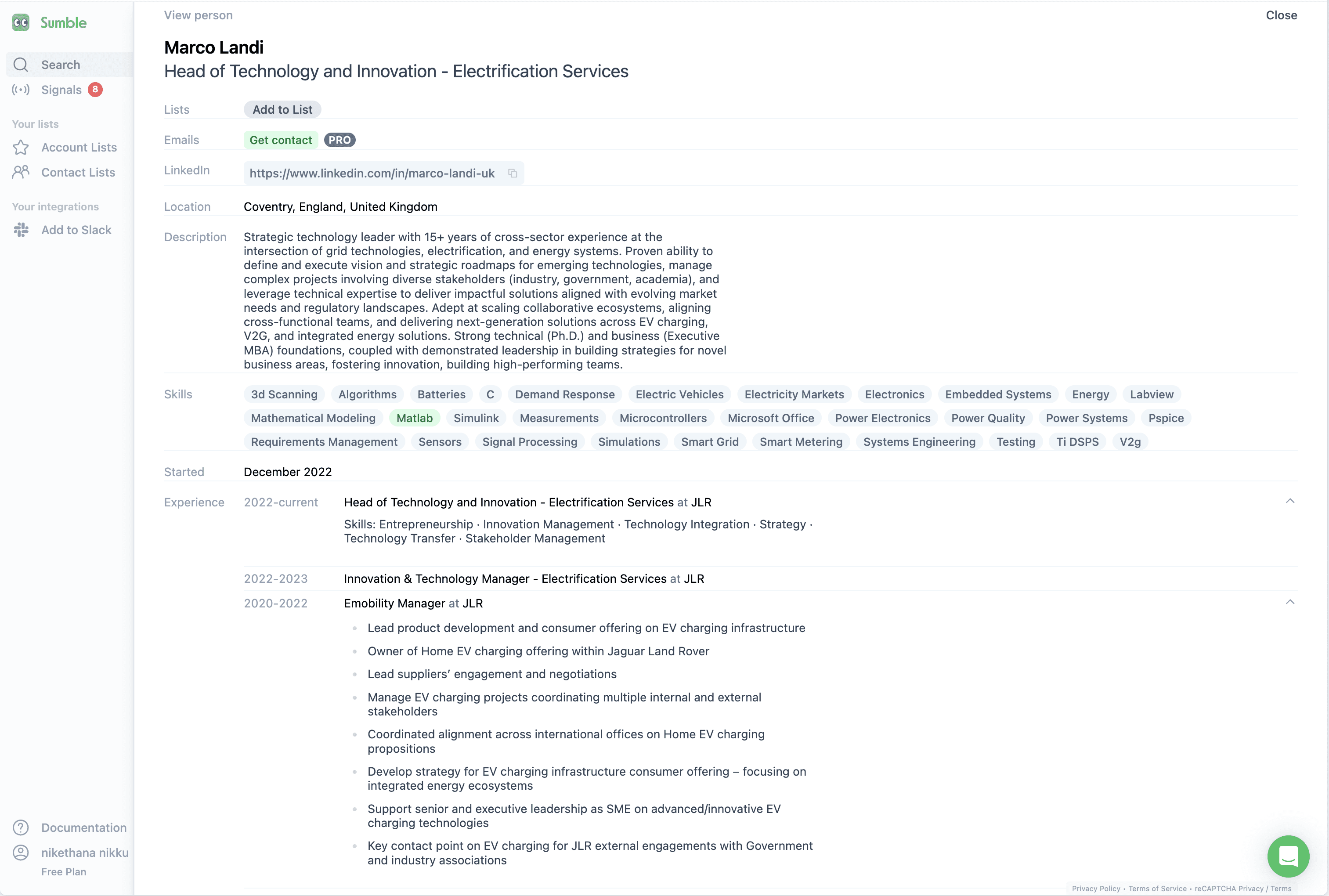
Fig: The screen I was asked to improve
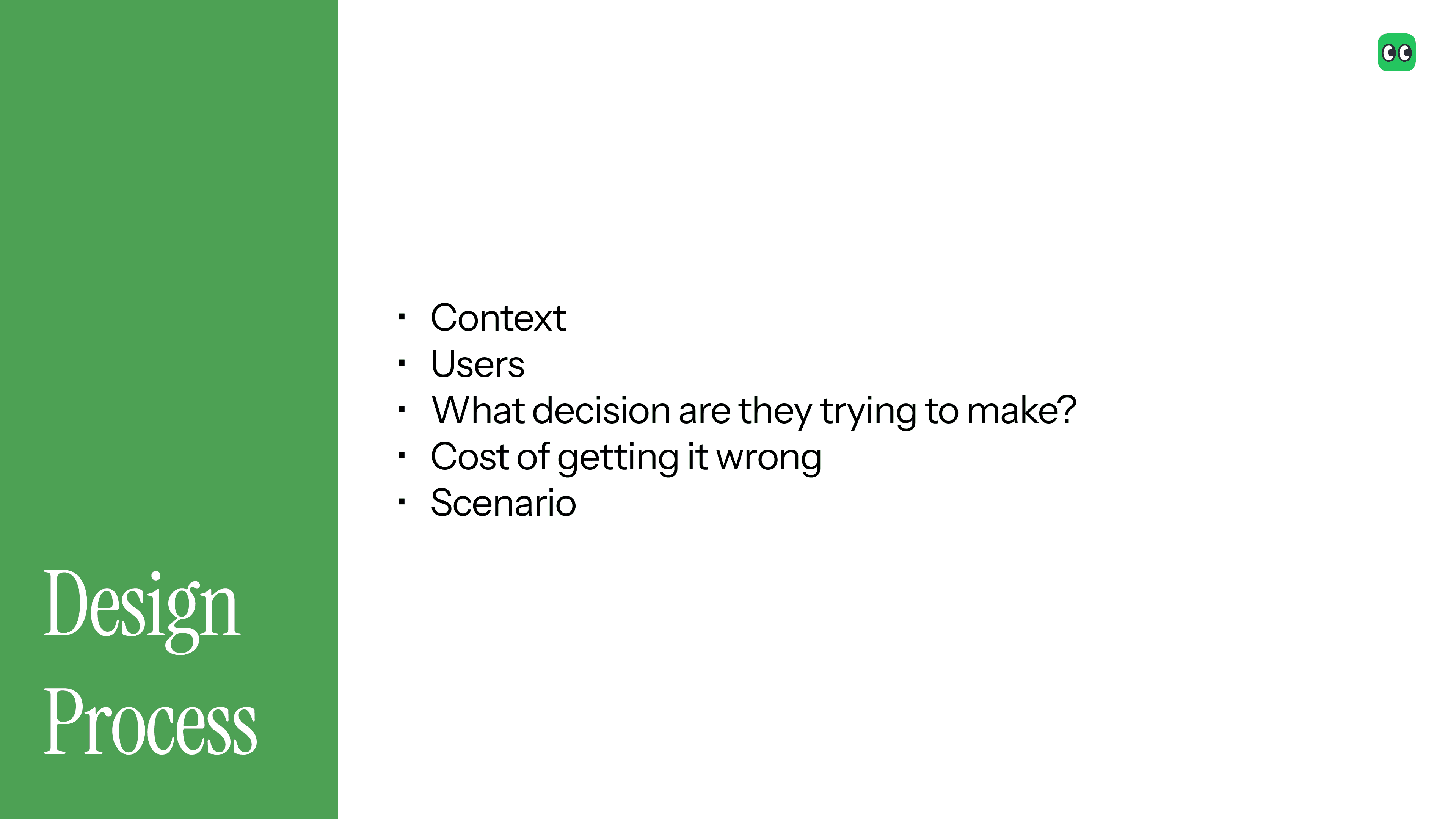
Fig: My process
01Design Process
Scenario
A head of technology and innovation at Jaguar Land Rover, arriving via a filter for the MATLAB technology.
What decision are they trying to make?
Is this the right MATLAB decision-maker at JLR, and what should I do next?
02Questions
Scope Sharpening Questions
Primary Decision
What single first move should this page drive: qualify, or contact?
Right Person, Right Time
How is this defined in GTM terms, and which data proves it (role/seniority, tech mentions, recent hiring/posts, location, timing)?
CTA Hierarchy
Which action is primary and why: Contact, Add to List, Compose Message, Share?
Data Variance
How often is data sparse/fuzzy, and how should the UI degrade gracefully?
03Product Auditing
Where Is the Current Layout Failing?
Before designing, I audited the existing platform to find where the view was failing the user.
- Data Dump vs. Decision Tool: The original UI optimized for data volume rather than decision-making, forcing users to manually scan biographies to find relevance.
- Layout Fragility: The existing design failed to degrade gracefully; sparse data profiles resulted in a broken user experience with no clear call-to-action.
- The "Recency" Blindspot: Vital GTM signals (recent hiring, MATLAB mentions) were buried, missing the "Right Time" window critical for successful outreach.
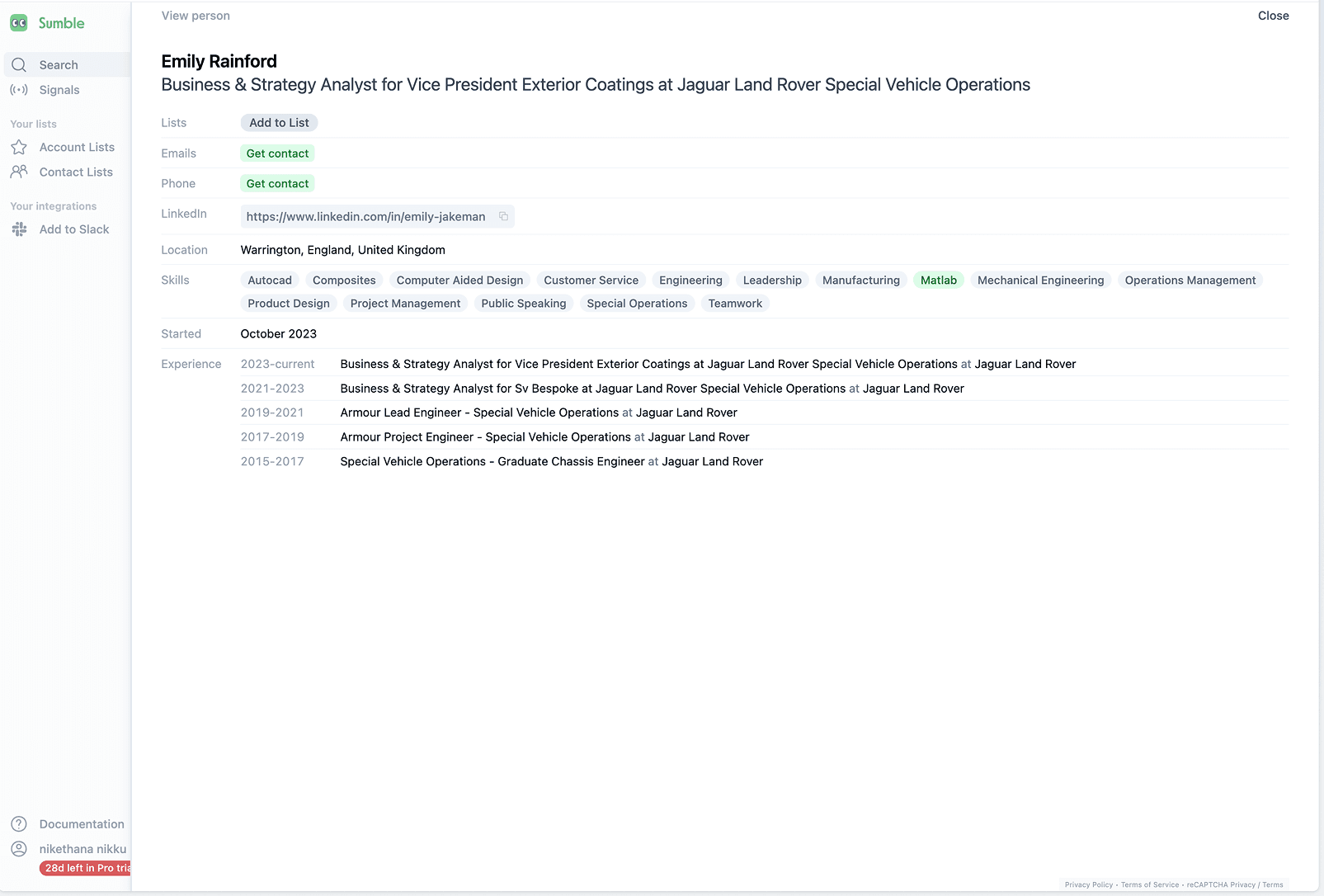
Fig: Example of sparse profile — to highlight inconsistency
04Perspective
Talking to GTM Users
GTM is a new field for me; to understand how agile they move, what volume they face, and what the active challenges are in finding good leads, I talked to 2 users to get their perspective.
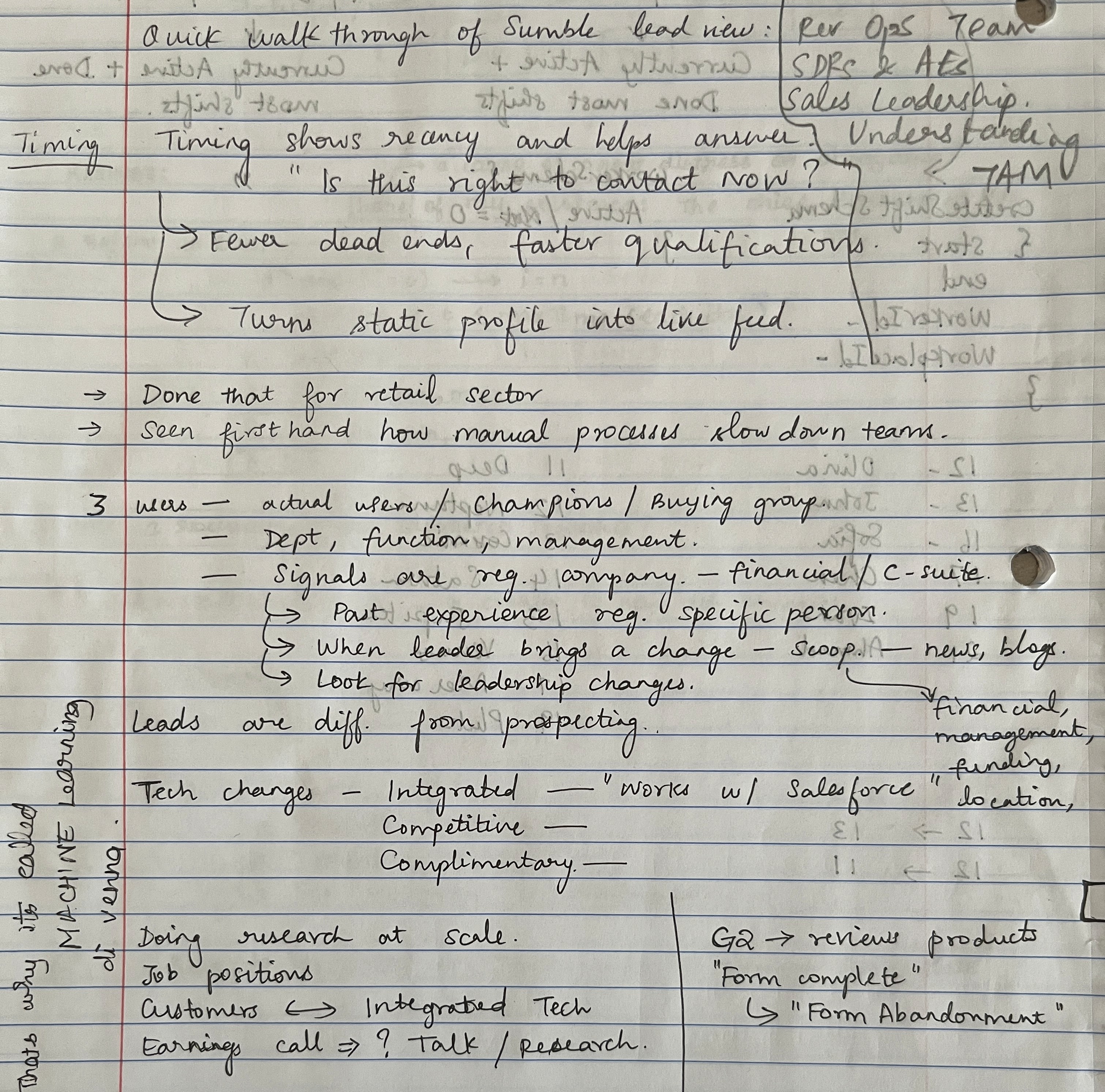
Fig: A snippet of user interview insight from 2 GTM folks
05Low-Fi Solutions
Reducing Cognitive Load
Aimed at reducing cognitive load and time-to-decision.

Fig: Rapid first-pass 1
06The Why
The Why Behind My Design Decisions
Shifting the platform from a "profile viewer" to an agentic decision tool.
- The "One-Line Why": Replaced dense biographical text with an AI-interpretable summary that answers the user's primary question: "Is this the right decision-maker right now?"
- Modular Extensibility: Engineered a component-based layout that prioritizes high information density regardless of data completeness, ensuring the UI remains functional for sparse profiles.
- Recency Signal Architecture: Promoted "Timing" to a primary data dimension, using time-relevancy badges for tech mentions and hiring spikes to drive immediate action.
- Actionable Hierarchy: Refactored the CTA logic to prioritize "Contact" and "List-building," aligning the UI with the user's high-velocity workflow.
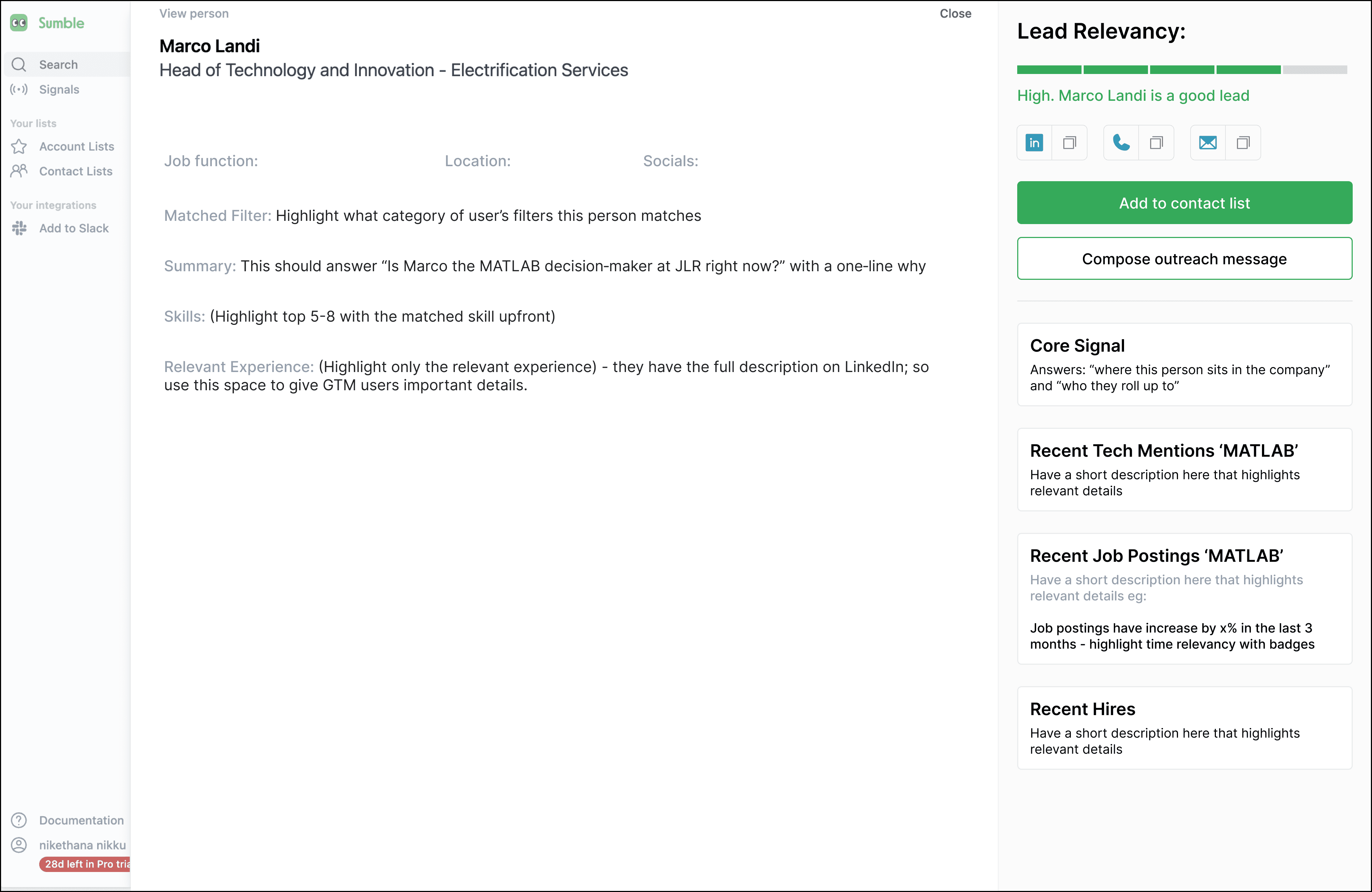
Fig: Rapid first-pass 2
07Trade Offs
Time vs. Solution
Two critical cuts made to protect the core value proposition in 72 hours.
- Deep vs. Wide User Segments: I intentionally ignored SDR and Marketing personas to solve exclusively for Sales Leadership. By narrowing the scope, I could obsess over the "One-liner Why" — the primary signal a leader needs to authorize outreach.
- Logic over Analytics: I deprioritized historical outreach data to focus on real-time relevance. In GTM, the "Right Time" is often a transient signal (recent job posts, tech mentions); I chose to build a robust UI for these "live" signals rather than a mediocre retrospective dashboard.
08Future
How I'd Improve With More Time & Resources
- Understand the different user segments and how success differs with each segment (RevOps, SDRs, AEs, Sales leadership, Marketing).
- What signals have historically predicted successful outreach (for both precision and volume GTM workflows)?
- How do GTM teams operationalize "right person + right time" today?
09Testing
How I'd Evaluate the Design
Measure lead qualification time and confidence rating after 10 profiles each.